
Editor’s Note
Digital marketing platforms release more changes than most businesses could—or should—track. At M&M Multimedia, we filter those updates down to the changes that can actually affect visibility, advertising performance and customer acquisition. Here’s what matters right now.
Ai Answer Summary
Google has expanded the ways businesses can measure and manage visibility in its generative Search experiences, while Google and Microsoft continue moving paid search toward AI-driven automation. For businesses, the practical response is not to chase every new AI feature: establish reliable measurement, audit automation settings, improve conversion data and make sure website and local-business information is clear enough for both people and machines to understand.
Key Takeaways
- Measure AI-search visibility instead of relying only on third-party estimates.
- Audit Google AI Max settings as Search campaign automation expands.
- Review Microsoft Advertising imports so Google-side automation is not copied blindly.
- Keep investing in original, useful content rather than supposed “GEO hacks.”
- Treat accurate Google Business Profile and website information as a growing part of AI-driven local discovery.
How The Major Changes Compare
| Platform / Area | Main Issue | What to Check | M&M View |
|---|---|---|---|
| Google Search / AI visibility | Generative-search measurement | AI visibility by page, country and device; crawl/index eligibility | Establish a baseline before changing content strategy. |
| Google AI Max | Search campaign automation | Automatically Created Assets, broad match, final URL expansion, brand/location controls and conversion goals | Test incrementally and optimize toward qualified outcomes. |
| Microsoft AI Max | Search automation + import inheritance | AI Max settings, scheduled Google Import, exclusions and landing-page routing | Do not assume Google and Microsoft should use identical automation. |
| Google Business Profile / Maps | AI-assisted local discovery | Categories, services, hours, products, reviews and website consistency | Treat structured local information as a conversion asset, not clerical maintenance. |
Google Search Is Giving Businesses More Visibility Into Ai Search Performance
What Changed
Google has continued expanding Search Console and Search documentation around generative Search experiences such as AI Overviews and AI Mode. The practical direction is increasingly clear: site owners have more first-party information available to evaluate how their content participates in AI-driven Search, rather than relying entirely on outside visibility estimates.
Why It Matters
For more than a year, marketers have debated how to “rank in AI.” That conversation often produced more speculation than useful strategy.
The better question is: which pages are actually earning visibility, and what makes those pages useful enough to surface?
That changes how Generative Engine Optimization should be managed. Instead of chasing unsupported tactics, businesses can compare AI-visible pages with traditional organic performers, identify the content formats and subjects that repeatedly earn visibility, and improve pages that demonstrate real traction.
Google’s own guidance for generative Search continues to emphasize the fundamentals: useful, original, non-commodity content; sound technical SEO; clear page structure; and strong supporting media. Google has also clarified that an llms.txt file is not required for Google Search visibility and does not provide a ranking advantage.
What Businesses Should Do
Establish an AI-search visibility baseline alongside traditional organic reporting. Evaluate the pages that earn visibility for original expertise, clear answers, supporting evidence, useful images or video, product or service specificity and clean technical structure.
Do not rebuild a content strategy around a supposed AI optimization trick. Build pages that are genuinely better sources.
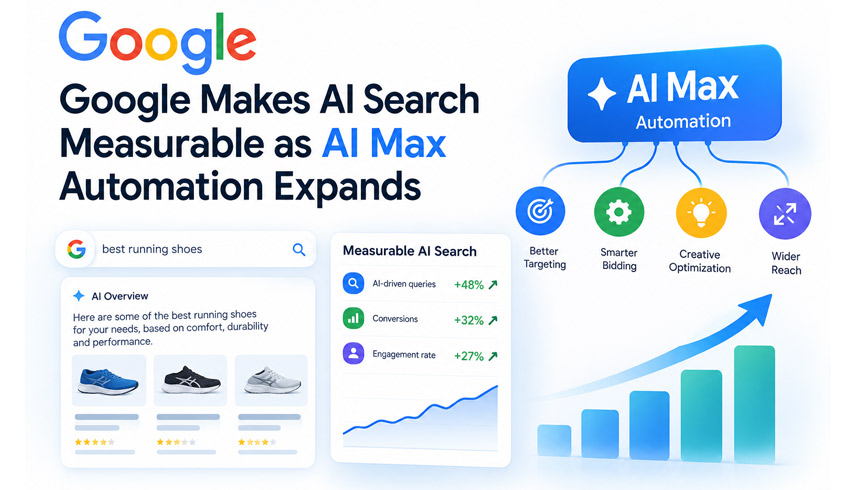
Google Ai Max Automation Deserves An Account-Level Audit
What Changed
Google continues moving Search advertising toward AI Max, which can expand query matching, customize advertising assets and route users toward relevant landing pages depending on campaign configuration.
For advertisers, the important change is not simply another AI feature. It is the continued movement of campaign mechanics toward automation.
Why It Matters
As targeting, ad text and landing-page selection become more dynamic, advertisers have to get better at defining success.
If a campaign is trained toward cheap form submissions and half of those submissions are poor leads, better automation may simply become better at generating the wrong outcome.
That is why the quality of conversion data matters more as advertising platforms automate more execution.
What Businesses Should Do
Before allowing broader automation, audit conversion actions, negative keywords, brand exclusions, geographic boundaries, landing-page expansion and the business outcomes being returned to the platform.
For lead-generation companies, the ideal measurement chain increasingly looks like:
Click → Lead → Qualified Lead → Appointment → Customer → Revenue
Use experiments where possible. The useful question is not whether an AI feature produces more conversions. It is whether it produces more profitable customers for that particular business.
Microsoft Ai Max Makes Cross-Platform Oversight More Important
Microsoft Ai Max Makes Cross-Platform Oversight More Important
What Changed
Microsoft Advertising has expanded its own AI Max capabilities for Search campaigns, including search-term matching, text customization, landing-page expansion, reporting and advertiser controls.
For agencies and businesses running both Google and Microsoft Advertising, the operational issue is particularly important: Google Import can carry campaign settings into Microsoft Advertising, reducing manual work but also creating the possibility that automation decisions are duplicated without enough scrutiny.
Why It Matters
Many advertisers treat Microsoft Advertising as a secondary channel and rely heavily on Google Import. That can be efficient, but the right configuration on Google is not automatically the right configuration on Microsoft.
Search behavior, volume, economics and audience mix can differ between platforms.
What Businesses Should Do
Audit scheduled imports and decide which settings should inherit. Monitor search terms, AI-generated assets, exclusions and landing-page routing separately on Microsoft rather than assuming Google performance validates the same setup everywhere.
Google’s Search Guidance Keeps Pointing Back To Original, Useful Content
What Changed
Google has continued updating its guidance around spam, site reputation and generative AI in Search. One message cuts across those updates: Google wants content that provides something useful beyond repackaging information already available elsewhere.
Its 2026 guidance for generative AI Search specifically emphasizes non-commodity content and pushes back on supposed AEO or GEO shortcuts that promise special treatment in AI results.
Why It Matters
AI makes it easier than ever to publish average content at scale. That also makes average content less differentiated.
A generic 1,500-word article assembled from information that already exists on ten other websites is not automatically valuable because it is long or technically optimized.
For businesses, defensible content increasingly comes from things competitors cannot reproduce as easily: staff expertise, first-party data, customer questions, original photos and video, local knowledge, demonstrations, comparisons, case studies and a real point of view.
What Businesses Should Do
Use AI to improve research, organization and production efficiency, but make the final page worth citing.
For M&M clients, that means leaning harder into original examples, expert commentary, useful comparison tables, customer questions, quality images and video, local evidence and first-party business knowledge—not publishing more words simply to publish more words.
What We’re Testing At M&M
We’re expanding the way we evaluate AI-search visibility alongside traditional organic performance and looking for patterns in which pages earn meaningful exposure.
On paid media, we’re treating AI Max as an experiment framework rather than a belief system: test automation, feed it better conversion data and judge it on qualified business outcomes.
We’re also expanding local audits beyond “is the Google Business Profile filled out?” As Search and Maps become more AI-assisted, the goal is to make sure a business can be accurately understood: what it does, where it serves, when it is open, what products or services are available, and what customers consistently say about it.
The Bottom Line
AI marketing is becoming more measurable—and more automated.
That does not mean businesses should turn on every AI feature as quickly as possible. It means the information supplied to those systems matters more.
Better content. Better creative. Better business data. Better conversion measurement.
The competitive advantage is increasingly knowing what to tell the platforms to optimize for—and having enough marketing judgment to determine whether they actually delivered it.
Need help figuring out what these changes mean for your SEO, paid media or local marketing? Talk to M&M Multimedia.
Frequently Asked Questions
How should businesses measure visibility in Google AI search?
Businesses should combine available first-party Search Console data with page-level organic performance, conversions and content analysis. The goal is not simply to count AI impressions, but to identify which pages earn visibility and whether that visibility contributes to useful business outcomes.
Do businesses need special schema to appear in Google AI Overviews or AI Mode?
No special “AI schema” is required. Google’s current guidance emphasizes established SEO fundamentals, crawlable content, unique value and useful multimedia. Structured data should accurately describe visible page content rather than being added as an AI-ranking shortcut.
Does an llms.txt file improve Google AI Search rankings?
Google says llms.txt is not needed for Google Search and does not positively or negatively affect visibility or rankings. A business may maintain one for other systems that use it, but it should not be treated as a Google GEO ranking tactic.
What is Google AI Max?
AI Max is a set of Google Search campaign capabilities that can broaden query matching, customize advertising assets and help route users to relevant landing pages. Businesses should evaluate it through controlled testing and qualified business outcomes rather than raw conversion volume alone.
What is Microsoft AI Max?
Microsoft AI Max is a Search advertising suite that uses automation for matching, creative customization and landing-page selection while providing advertiser controls and reporting. Businesses running both Google and Microsoft Ads should review how imported settings affect each platform independently.
Why does conversion quality matter more with AI-powered advertising?
Automated advertising systems optimize toward the signals advertisers provide. If the primary signal is a low-quality form submission, the system can optimize toward more of those submissions. Feeding qualified-lead, appointment, customer and revenue outcomes back into the advertising process gives automation a better definition of success.

